


We often think of ceiling fans as summer items, meant to push air down and cool us off. But what if we told you they can actually help warm your home in the winter? It sounds counterintuitive, we know. Yet, with a simple adjustment, these devices can become a part of your winter heating strategy, working alongside other systems to keep things comfortable and potentially save on your energy bills. We’re going to look at how this works and how it fits with things like energy efficient lighting.
Key Takeaways
- Ceiling fans can help distribute warm air that rises to the ceiling during winter, making your heating system work less.
- By reversing the fan direction, we can gently push warm air down, creating a more even temperature throughout the room.
- Ceiling fans can work together with energy efficient lighting and smart home tech to manage your home’s climate and comfort.
Maximizing Heat Distribution With Ceiling Fans
We often think of ceiling fans as summer tools, meant to push air down and cool us off. But when winter rolls around, these same fans can actually help us stay warmer and save a bit on heating bills. It’s all about how we use them.
Understanding Air Stratification in Winter
During the colder months, our heating systems work hard to warm the air in our homes. The problem is, warm air naturally rises. This means the warmest air tends to collect up near the ceiling, leaving the lower parts of the room, where we spend most of our time, feeling cooler. This phenomenon is called air stratification. We’ve all felt it – you can be standing near the ceiling vent and feel a blast of heat, but down by the floor, it’s a different story.
This uneven distribution means your thermostat might be calling for more heat than necessary just to make the lower levels comfortable. Your furnace runs more, using more energy, and the upper parts of your rooms get uncomfortably warm. It’s a cycle that wastes energy and doesn’t keep us as cozy as we’d like.
Reversing Fan Direction for Warm Air Circulation
This is where reversing your ceiling fan comes in handy. Most modern ceiling fans have a switch that allows you to change the direction the blades spin. In winter, we want to set the fan to spin in a clockwise direction at a low speed. Instead of pushing air down, this gentle clockwise rotation pulls the cooler air up towards the ceiling. As this cooler air rises, it mixes with the warm air that’s already pooled near the ceiling. The fan then gently pushes this now-mixed, slightly cooler air outwards along the ceiling and down the walls. This process helps to break up that layer of hot air at the top and circulate it back down into the living space without creating a noticeable draft. The goal is to gently move the warm air that’s already there, rather than creating a strong breeze.
Here’s a quick guide to setting it up:
- Check your fan: Locate the small switch, usually on the motor housing, that controls direction.
- Set for winter: Flip the switch so the blades spin clockwise when viewed from below.
- Adjust speed: Start with the lowest speed setting. You don’t want a strong downdraft; you’re just looking for gentle circulation.
Using your ceiling fan in reverse during winter is a simple adjustment that can make a noticeable difference in how evenly your home is heated. It’s a way to make the most of the heat your system is already producing, potentially reducing how often your furnace needs to kick on.
Ceiling Fans As A Complement To Energy Efficient Lighting
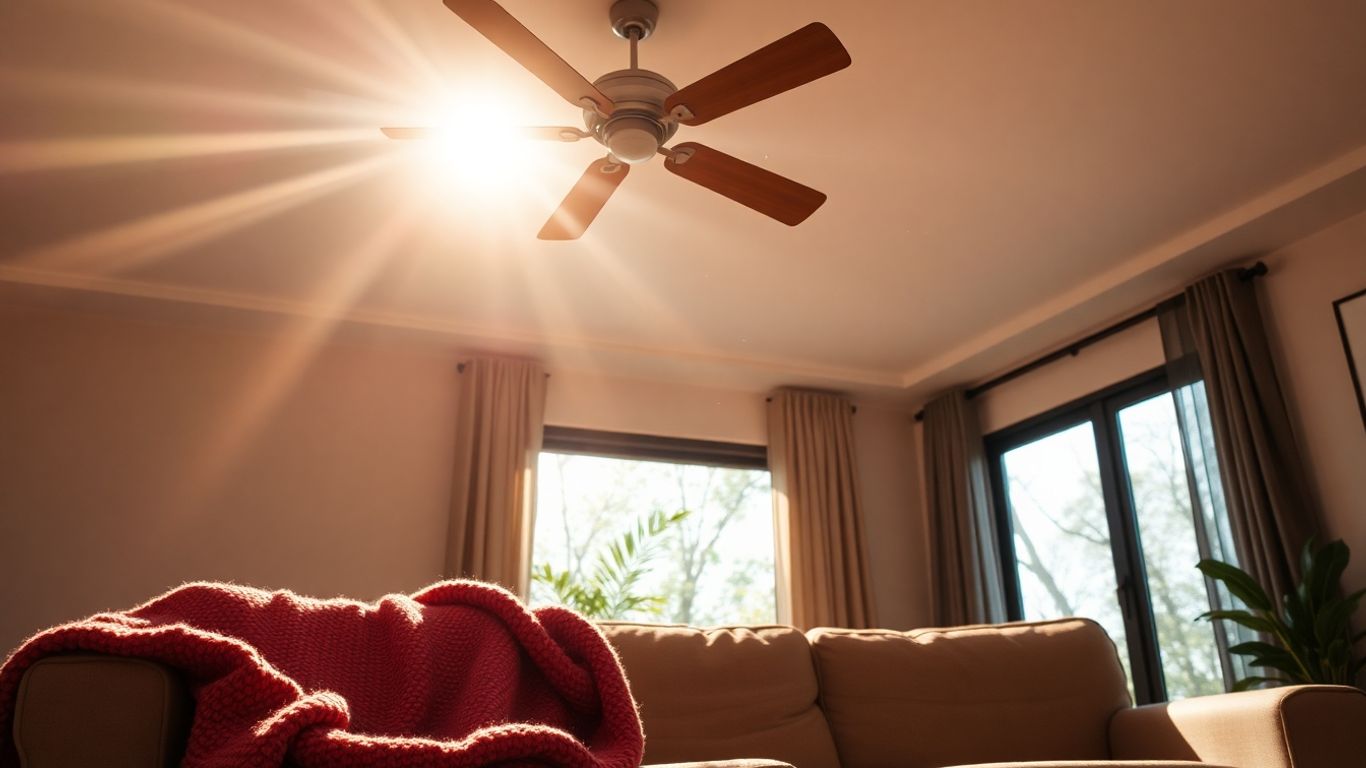
We often think of ceiling fans as just summer tools, meant to push air down and cool us off. But they can actually play a part in how we feel warm in the winter, too. When we talk about energy efficient lighting, we’re usually focused on the bulbs themselves, right? Less wattage, less heat generated by the light. That’s good for saving energy, but it can sometimes mean less ambient heat in a room. This is where our ceiling fans can step in.
Integrating Fan Operation With Smart Home Systems
Smart home tech is getting pretty common, and it’s not just for turning lights on and off with your voice. We can link our ceiling fans into these systems too. Imagine this: your smart thermostat notices the house is getting a bit cooler than you like, but it’s not quite cold enough to crank the main heater. Instead of just letting the temperature drop, we can program the smart system to gently turn on the ceiling fan, but in reverse.
- Set schedules: Have the fan run for a bit each hour, even when the heat isn’t on, just to keep the air moving.
- Link to thermostats: If the temperature dips a degree or two, the fan can kick in automatically.
- Voice commands: "Hey, make it a bit warmer in here" could trigger a fan cycle.
This kind of integration means we’re not just passively accepting the temperature. We’re actively managing the air in our homes.
The Synergy Between Airflow and Perceived Warmth
So, how does moving air make us feel warmer when the heat is off or low? It’s all about how our bodies sense temperature. When the air in a room is still, especially near windows or exterior walls, it can get cooler and settle there. This cooler air sinks, and the warmer air rises, creating layers. Our fans, when set to spin clockwise at a low speed, gently push that warmer air that’s collected near the ceiling down towards us.
We’re not trying to create a wind tunnel here. The goal is a subtle, steady circulation that redistributes the existing warmth. It’s about making the most of the heat we already have, rather than constantly adding more.
This gentle downward flow of air can make the room feel several degrees warmer than it actually is. It tricks our senses a bit, making us feel more comfortable without needing to turn up the thermostat. This means less energy used by the main heating system, which is good for our wallets and the planet. It’s a simple trick, but it works surprisingly well, especially when paired with those new, low-heat LED lights.
Wrapping Up: Fans Aren’t Just for Summer
So, we’ve seen how ceiling fans can actually help keep our homes warmer in the winter. It might seem a bit backward, thinking about fans when we’re trying to heat things up, but the science is pretty straightforward. By gently pushing the warm air that rises to the ceiling back down towards us, these fans help make our heating systems work less. This means we can potentially save some money on our energy bills and feel a bit more comfortable without cranking the thermostat way up. It’s a simple adjustment, really, just flipping a switch to reverse the direction. We encourage everyone to give it a try this winter. You might be surprised at the difference it makes in your own home.
Frequently Asked Questions
How can ceiling fans help warm our homes in winter?
During colder months, warm air naturally rises and collects near the ceiling, leaving the lower parts of our rooms feeling cooler. We can use ceiling fans, set to spin in reverse (usually clockwise), to gently push this warm air back down. This helps spread the heat evenly throughout the room, making it feel warmer without needing to turn up the thermostat.
Will running a ceiling fan use a lot of electricity in the winter?
Actually, ceiling fans are quite energy-efficient. Running a fan uses much less power than a typical space heater. By helping our main heating system work less by distributing warm air better, we can often save energy overall. It’s a smart way to boost comfort without a big jump in our electric bill.
Can we control our ceiling fans with smart home devices?
Yes, many modern ceiling fans can be integrated with smart home systems. This means we can control them using voice commands or through smartphone apps. We can even set schedules for when the fan should run, or connect it to other smart devices, like our thermostat, for a truly automated and efficient heating experience.
