


Making our homes more energy efficient doesn’t have to be complicated. With today’s technology, we can make smart choices that save us money and help the planet. We’re going to look at some of the best ways to upgrade our homes to use less energy. These upgrades aren’t just about saving a few bucks; they’re about creating more comfortable living spaces and reducing our overall impact.
Key Takeaways
- Smart thermostats help manage heating and cooling automatically, cutting down on wasted energy.
- Switching to LED lights uses much less electricity than older bulbs and lasts longer.
- Choosing appliances with high energy efficiency ratings, like those with Energy Star labels, leads to significant long-term savings.
- Home energy monitoring systems show us exactly where our power is going, helping us find and fix wasteful usage.
- Better insulation and sealing up air leaks keep our homes warmer in winter and cooler in summer with less effort from our heating and cooling systems.
Smart Thermostats For Intelligent Climate Control
Understanding Smart Thermostat Features
We’ve all been there – forgetting to turn down the heat before leaving for work or coming home to a chilly house. Smart thermostats are here to help us manage our home’s temperature more effectively. They go beyond simple programming, offering features that learn our habits and adjust automatically. Many models connect to Wi-Fi, allowing us to control them remotely using a smartphone app. This means we can tweak the temperature from anywhere, whether we’re stuck in traffic or on vacation. Some even have sensors that can detect when rooms are occupied, adjusting heating or cooling only where it’s needed. We’ve found that the ability to set ‘away’ modes or create custom schedules based on our daily routines makes a big difference in comfort and energy savings. Look for features like geofencing, which uses your phone’s location to adjust the thermostat when you leave or approach home. Others offer detailed energy usage reports, helping us see exactly where our heating and cooling dollars are going.
Installation And Integration
Installing a smart thermostat is often a straightforward DIY project, though we always recommend checking your system’s compatibility first. Most units come with clear instructions and the necessary hardware. The process typically involves turning off the power to your HVAC system, removing your old thermostat, connecting the wires to the new unit, and then mounting the new thermostat. Many smart thermostats are designed to work with most existing HVAC systems, including furnaces, heat pumps, and central air conditioners. However, some complex systems or older wiring might require professional help. Integration with other smart home devices, like voice assistants (Alexa, Google Assistant), is also a common feature. This allows for hands-free control, making it even easier to adjust your home’s climate.
Benefits Of Smart Thermostats For Energy Efficiency Upgrades
The primary benefit of a smart thermostat is its potential to reduce energy consumption. By learning our schedules and preferences, these devices can avoid unnecessary heating or cooling when we’re not home or asleep. This intelligent automation can lead to significant savings on our energy bills. For instance, if we typically leave for work at 8 AM and return at 5 PM, a smart thermostat can automatically lower the temperature during those hours and then bring it back to a comfortable level just before we arrive. The detailed energy reports provided by many smart thermostats also help us identify patterns and make informed decisions about our usage. We’ve seen that even small adjustments, guided by the data from these reports, can add up to noticeable savings over time. They also contribute to a more comfortable living environment by maintaining consistent temperatures and responding quickly to changes.
LED Lighting Solutions For Brighter, Greener Homes
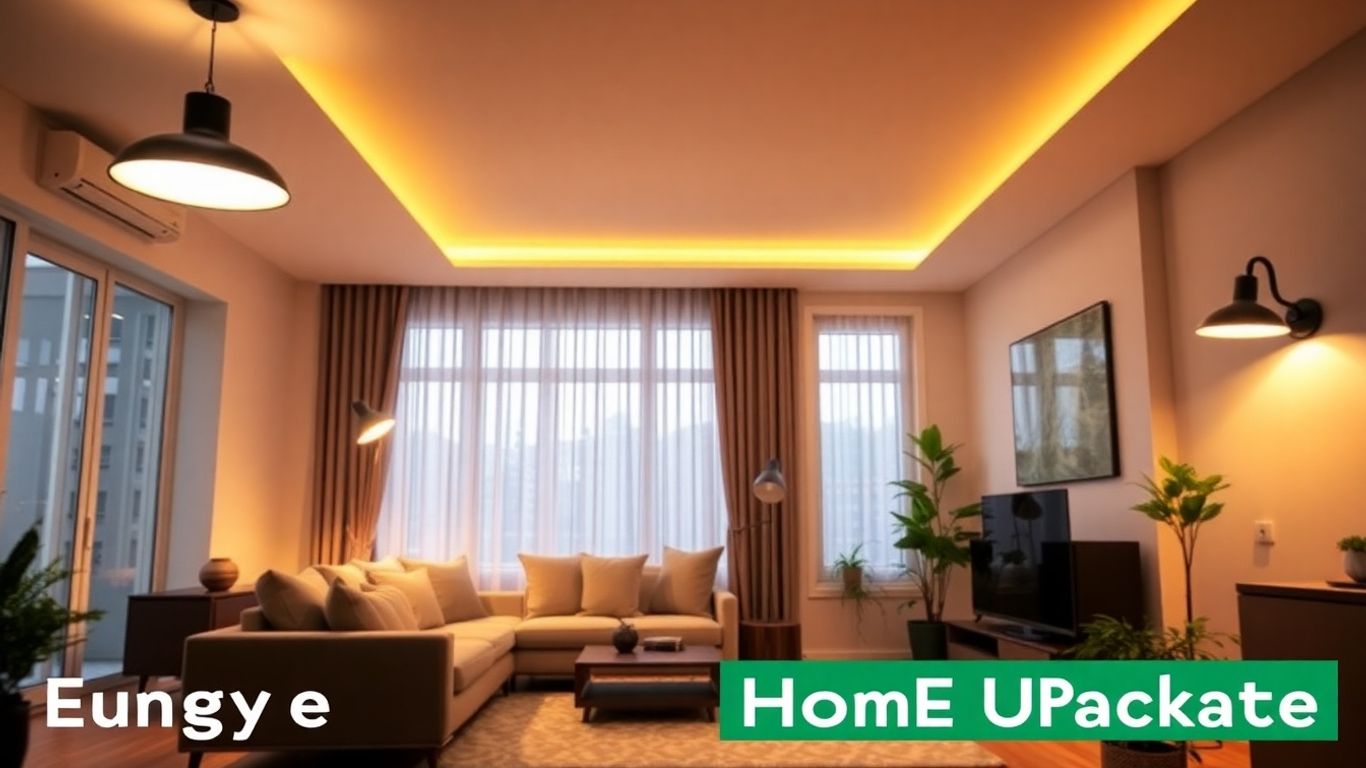
We’ve all seen the old incandescent bulbs, right? The ones that get super hot and burn out way too fast. Well, we’re here to talk about a much better way to light up our homes: LEDs. They’re not just about saving a bit on the electricity bill; they really change how we think about lighting our living spaces. It’s a simple switch that makes a big difference.
Comparing LED To Traditional Lighting
When we look at the old-fashioned incandescent bulbs, they work by heating a tiny wire until it glows. This process wastes a lot of energy as heat. Think about touching one after it’s been on for a while – ouch! Fluorescent bulbs, like the curly ones you might have seen, are better, but they still have their issues. They contain mercury, and sometimes they flicker, which can be annoying. LEDs, on the other hand, work differently. They use semiconductors to produce light, and this is way more efficient. This efficiency means they use significantly less electricity to produce the same amount of light.
Here’s a quick look at how they stack up:
| Feature | Incandescent | Fluorescent (CFL) | LED |
|---|---|---|---|
| Energy Use | Very High | Medium | Very Low |
| Lifespan | Short | Medium | Very Long |
| Heat Output | High | Low | Very Low |
| Environmental Impact | High | Medium (mercury) | Low |
| Initial Cost | Low | Medium | Higher |
Choosing The Right LED Bulbs
Walking into a store to buy LED bulbs can be a bit overwhelming at first. There are so many options! We need to think about a few things. First, the brightness, measured in lumens. Don’t get confused by watts; that’s just how much energy it uses, not how bright it is. A 60-watt incandescent is roughly equivalent to an 800-lumen LED. Then there’s the color temperature, measured in Kelvin (K). Lower numbers, like 2700K, give off a warm, yellowish light, similar to old bulbs, which is nice for living rooms. Higher numbers, like 5000K, produce a cooler, bluer light, good for task areas like kitchens or garages. We also want to check the Color Rendering Index (CRI), which tells us how accurately the light shows colors. A CRI of 80 or higher is generally good for homes.
Smart Lighting Controls And Automation
Beyond just swapping out bulbs, we can get even smarter with our lighting. Smart LED systems let us control our lights from our phones or with voice commands. We can dim them, change colors, and set schedules. Imagine lights turning on automatically when you arrive home or dimming for movie night. This isn’t just about convenience; it’s about saving energy. We can program lights to turn off when a room is empty or to dim during daylight hours. Some systems even connect to sensors that detect natural light levels and adjust the artificial light accordingly. It’s a way to make our homes more responsive and efficient without us even having to think about it.
We found that setting up a simple schedule for our outdoor lights, so they only come on at dusk and turn off at dawn, cut our outdoor lighting energy use by almost half. It was a small change, but it really added up.
These upgrades are pretty straightforward. We can start with a few key areas and see the benefits pretty quickly. It’s a good way to begin making our homes more energy-conscious.
High-Efficiency Appliances: A Cornerstone Of Energy Efficiency Upgrades
When we talk about making our homes more energy-efficient, we often think about insulation or smart thermostats. But let’s not forget about the workhorses of our homes: our appliances. Upgrading to high-efficiency models can make a surprisingly big difference in our energy bills and our environmental footprint. It’s one of those upgrades that pays for itself over time, and honestly, who doesn’t want to save money while also doing a little good for the planet?
Decoding Energy Star Ratings
So, how do we know if an appliance is actually efficient? The most common way is by looking for the Energy Star label. This is a program run by the U.S. Environmental Protection Agency (EPA) and the Department of Energy. It identifies products that meet strict energy efficiency guidelines set by the government. Basically, if it has the Energy Star label, it’s designed to use less energy than standard models. This means less electricity or gas consumed, which translates directly into lower utility bills for us. It’s a simple, visual cue that helps us make informed choices at the store. We’ve found that looking for this label is the first step in picking out new appliances that will help us save.
Key Appliance Upgrades To Consider
When it comes to upgrading, some appliances offer more significant savings than others. Here are a few we should definitely think about:
- Refrigerators and Freezers: These run 24/7, so an efficient model can really add up. Look for Energy Star certified models, especially if you’re replacing an older unit. Newer designs are much better at keeping things cold without using a ton of power.
- Washing Machines and Dryers: Laundry appliances can be big energy users. High-efficiency washers use less water and energy, and front-loaders are generally more efficient than top-loaders. For dryers, consider heat pump models, which are significantly more efficient than traditional electric resistance dryers.
- Dishwashers: Modern Energy Star dishwashers are designed to use less water and energy while still getting our dishes clean. They often have improved water spray patterns and better insulation.
- Water Heaters: This is another major energy consumer in most homes. Upgrading to a high-efficiency tankless water heater or a heat pump water heater can lead to substantial savings on gas or electricity bills.
Long-Term Savings With Efficient Appliances
It’s true that high-efficiency appliances can sometimes have a higher upfront cost. However, we need to look at the bigger picture. The money we save on energy bills over the lifespan of the appliance often far outweighs that initial investment. Think about it: if a new refrigerator uses 20% less energy than your old one, that’s money back in your pocket every single month. Over 10 or 15 years, that really starts to add up. Plus, these appliances often perform better and last longer, meaning fewer repair calls and replacements down the line. It’s a smart financial move that also benefits the environment.
Making the switch to energy-efficient appliances isn’t just about saving money; it’s about investing in a more sustainable future for our homes and our communities. Every little bit helps, and these upgrades are a significant step in the right direction.
We’ve found that when we plan our appliance purchases around efficiency, we feel better about our choices. It’s a tangible way to reduce our household’s energy demand and contribute to a greener lifestyle without sacrificing comfort or convenience.
Home Energy Monitoring Systems: Gaining Insight Into Usage
We often talk about upgrading our homes for better energy efficiency, but how do we really know where our power is going? That’s where home energy monitoring systems come in. These systems give us a clear picture of our electricity consumption, helping us pinpoint where we can make the biggest changes. Think of it like a fitness tracker for your house – it shows you the data so you can make smarter choices.
Understanding How Energy Monitors Work
At their core, these systems track the flow of electricity into your home. Most connect to your main electrical panel, using sensors to measure the current and voltage. This data is then sent wirelessly to a display unit or an app on your phone or computer. You can see real-time energy usage, track historical data, and often get breakdowns by appliance or circuit. It’s pretty neat to see exactly how much power your refrigerator is using compared to your lights, for instance.
Identifying Energy Hogs With Monitoring Tools
One of the biggest advantages of these systems is their ability to reveal those sneaky energy-guzzlers. We might have an idea of which appliances use a lot of power, but a monitor shows us the actual numbers. You can often see the wattage a device is drawing, and by monitoring over time, you can identify appliances that are running constantly or using more energy than they should. This is especially helpful for older appliances that might be past their prime and becoming inefficient. We’ve found that sometimes, a seemingly small device can add up to a significant portion of our bill if it’s always on or malfunctioning.
Leveraging Data For Behavioral Changes
Seeing the data is one thing, but using it to change our habits is where the real savings happen. When we can see the immediate impact of turning off lights or unplugging devices, it makes those actions more meaningful. Many systems allow us to set alerts for high usage periods or when specific appliances are drawing too much power. This kind of feedback loop encourages us to be more mindful of our energy use throughout the day. It’s not just about the upgrades we make; it’s also about how we live in our homes.
The initial setup might seem a bit technical, but once it’s running, the insights it provides are incredibly straightforward. We’ve found that simply being aware of our consumption has led us to make small, consistent changes that add up over time. It’s a powerful tool for anyone serious about reducing their energy bills and their environmental footprint.
Advanced Insulation And Air Sealing Techniques
We often focus on the shiny new gadgets when we think about upgrading our homes for better energy use, but sometimes the most impactful changes are the ones we can’t see. Proper insulation and sealing up those little drafts are like giving your house a warm, cozy blanket. It stops the conditioned air from escaping and the outside weather from getting in, making your heating and cooling systems work a lot less. This means lower energy bills and a more comfortable home year-round.
The Role Of Insulation In Energy Efficiency
Think of insulation as the barrier that keeps your home’s temperature stable. Without enough of it, or if it’s old and compressed, heat will just move freely between the inside and outside. This is especially true in places like the attic, which can be a major source of heat loss in the winter and heat gain in the summer. We need to make sure we’re using the right type of insulation for each area of the house and that it’s installed correctly. Different materials have different R-values, which is a measure of how well they resist heat flow. The higher the R-value, the better the insulation.
- Attic Insulation: This is often the most cost-effective place to add insulation. We typically look at blown-in cellulose or fiberglass, or batts.
- Wall Insulation: While more involved, adding insulation to walls, especially during renovations, makes a big difference.
- Basement and Crawl Space Insulation: These areas can also contribute significantly to energy loss if not properly insulated.
Professional Air Sealing Services
Even with great insulation, air can still sneak in and out through tiny gaps and cracks. This is where air sealing comes in. Professionals use specialized tools and materials to find and seal these leaks. They often start by performing a blower door test, which depressurizes the house to help identify where air is escaping. Then, they’ll use caulk, spray foam, and weatherstripping to close up these openings. This process is incredibly effective at stopping drafts and improving overall comfort. It’s not just about sealing obvious holes; it’s about meticulously going over joints, penetrations for pipes and wires, and around windows and doors.
DIY Air Sealing Strategies
While some air sealing tasks are best left to the pros, there are definitely things we can do ourselves to make a difference. Simple tasks like applying caulk around window and door frames, or using spray foam to fill larger gaps in the basement or attic, can be tackled with a bit of effort. Weatherstripping existing doors and windows is another straightforward DIY project that pays off. We just need to be careful and thorough. It’s easy to miss spots, so taking your time and maybe even using a smoke pencil or incense stick to detect drafts can help. Remember to check areas where different building materials meet, like where the foundation meets the walls, or where plumbing and electrical lines enter the house.
Sealing air leaks is a bit like plugging holes in a leaky bucket. You can keep adding water (heating or cooling), but if the holes aren’t plugged, you’re just wasting energy and money. It’s a foundational step for any home energy efficiency plan.
Solar Panel Integration For Sustainable Power
Thinking about adding solar panels to your home? It’s a big step, but one that can really change how we power our lives. We’ve been looking into it ourselves, and it’s more than just putting panels on the roof. It’s about making a long-term investment in a cleaner future and potentially cutting down on our electricity bills significantly. Let’s break down what’s involved.
Assessing Your Home’s Solar Potential
Before we even think about buying panels, we need to figure out if our house is a good candidate. This involves a few key things:
- Sunlight Exposure: How much direct sunlight does your roof get throughout the day and year? Shady spots from trees or nearby buildings can make a big difference. We’ve noticed our south-facing roof gets the most sun, which is a good sign.
- Roof Condition and Angle: Is your roof in good shape? Solar panels are heavy and need a solid foundation. The angle and direction of your roof also play a role in how much energy you can capture. A steeper angle might be better in some climates, while a flatter one might work in others.
- Energy Usage: How much electricity do we actually use? Knowing our average monthly consumption helps determine the size of the solar system we’d need. We’ve been tracking our bills to get a clear picture.
- Local Regulations and HOA Rules: Sometimes, there are local rules or homeowner association guidelines about solar panel installations. It’s important to check these early on.
We found that a professional assessment is usually the best way to get accurate information. They can use special tools to measure sunlight and assess your roof’s suitability.
Types Of Solar Panel Systems
There are a few main ways to set up solar power for our homes:
- Grid-Tied Systems: These are the most common. They connect to the public electricity grid. When your panels produce more power than you need, the excess goes back to the grid, and you might get credit for it. If you need more power than your panels are producing, you draw from the grid as usual. This is a good balance for most homeowners.
- Off-Grid Systems: These systems are completely independent of the public grid. They require a battery storage system to save power for nighttime or cloudy days. This is a more complex and expensive setup, usually for remote locations.
- Hybrid Systems: These combine grid-tied functionality with battery storage. They offer the best of both worlds: you can use stored battery power during outages or peak times, and still be connected to the grid.
Incentives And Rebates For Solar Energy Efficiency Upgrades
One of the biggest hurdles for many of us is the upfront cost. Thankfully, there are often incentives available that can make solar more affordable. These financial aids can significantly reduce the overall investment.
- Federal Tax Credits: The government often offers tax credits for installing solar energy systems. These can be a substantial percentage off the total cost.
- State and Local Rebates: Many states, cities, and even utility companies provide their own rebates or performance-based incentives. These vary widely by location, so it’s worth doing some local research.
- Net Metering Policies: As mentioned with grid-tied systems, net metering allows you to get credit on your electricity bill for the excess power your panels send back to the grid. The specifics of these policies differ from place to place.
We’ve found that looking into these incentives is a must. It can make the switch to solar a much more practical and financially sound decision for our homes.
Moving Forward with Smarter Energy Use
As we wrap up, it’s clear that updating our home’s electrical systems offers a real path to using less energy. We’ve looked at how new wiring, smart devices, and efficient lighting can make a big difference. These changes might seem like a lot at first, but the long-term savings on bills and the better comfort in our homes are definitely worth it. By taking these steps, we can all contribute to a more sustainable future, one home at a time. It’s about making practical choices that benefit both our wallets and the planet.
Frequently Asked Questions
What are the main benefits of upgrading our home’s electrical systems for energy efficiency?
By upgrading our electrical systems, we can significantly lower our energy bills and reduce our environmental impact. Newer technologies use less power, meaning we spend less money on electricity and contribute less to pollution. It’s a win-win for our wallets and the planet.
How do smart thermostats help us save energy?
Smart thermostats learn our habits and adjust the temperature automatically. We can also control them remotely using our phones. This means we’re not heating or cooling an empty house, which saves a lot of energy and money over time.
Why are LED lights a better choice than old-fashioned bulbs?
LED lights use much less electricity to produce the same amount of light as traditional bulbs. They also last way longer, so we don’t have to replace them as often. This saves us money on both our electricity bills and replacement costs.
What does an Energy Star rating mean for appliances?
When we see an Energy Star label on an appliance, it means that it has been certified to be more energy-efficient than standard models. These appliances use less energy to do the same job, helping us save money and reduce waste.
How can a home energy monitoring system help us reduce our electricity use?
These systems show us exactly how much electricity different appliances and devices are using. By seeing this information, we can easily spot which ones are using too much power and make changes to reduce our overall consumption. It’s like having a guide to help us be more mindful of our energy use.
Is installing solar panels a good idea for saving energy and money?
Yes, installing solar panels allows us to generate our own clean electricity from the sun. This can drastically cut down our reliance on the power grid and significantly reduce our monthly electricity bills. Plus, we’re using a renewable energy source, which is great for the environment.
